
India’s renewable energy transition is no longer a future promise—it is an active, visible shift reshaping the country’s power landscape. Solar energy, in particular, has moved from pilot projects to massive utility-scale installations that now power homes, farms, and industries. At the heart of this growth are a handful of states that have emerged as clear leaders.
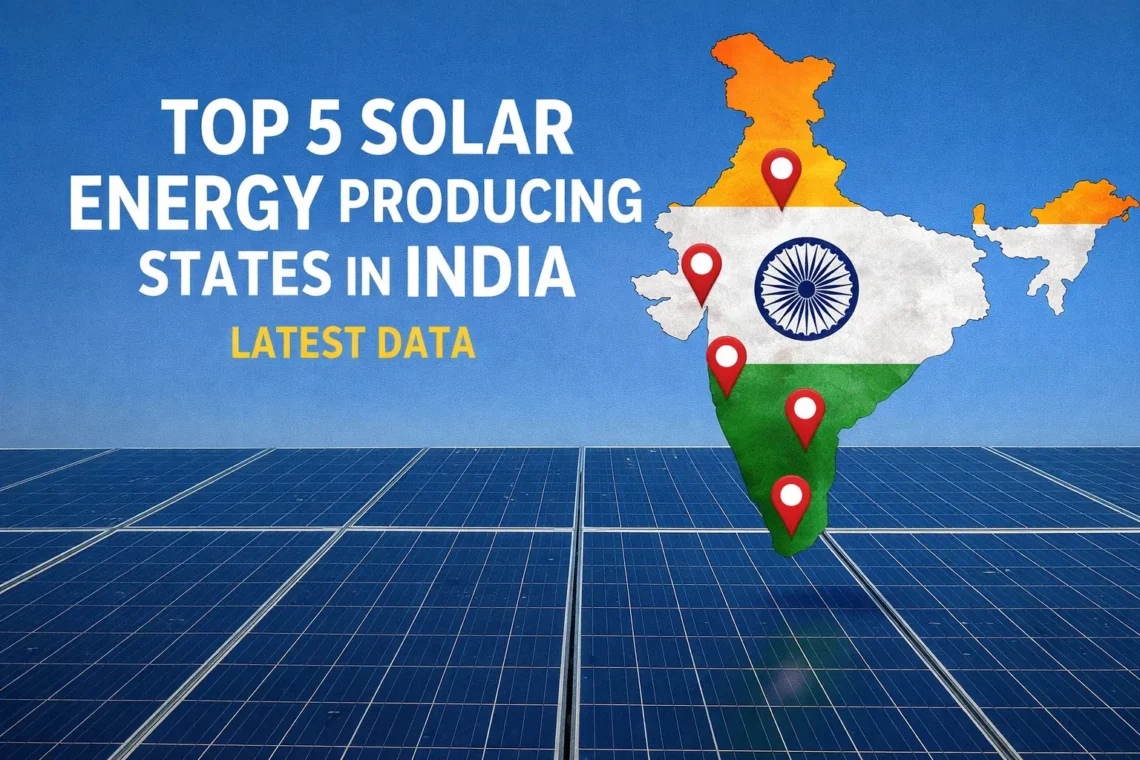
This article breaks down the Top 5 Solar Energy Producing States in India Latest Data, explaining why these states lead the rankings, how they built scale so quickly, and what their progress means for India’s energy security. Using reported capacity trends, policy developments, and on-ground project examples, we’ll explore how geography, governance, and technology intersect to define solar leadership today.
Why State-Level Solar Production Matters
The Role of States in India’s Solar Growth
In India, energy is a shared responsibility between the central government and states. While national missions set targets, it is state governments that allocate land, manage grid integration, and implement incentives. This makes state-level solar production a key indicator of real progress.
From a practical standpoint, strong solar-producing states:
- Reduce pressure on the national grid.
- Attract private and foreign investment.
- Create localized green jobs and infrastructure.
For example, a solar-heavy state can meet its daytime demand internally, exporting surplus power to neighboring regions. This decentralized strength is critical as India’s overall electricity demand continues to rise.
Installed Capacity vs Actual Generation
When ranking the top 5 solar energy producing states in India latest data, analysts usually rely on installed capacity, which reflects long-term investment and infrastructure strength. Actual generation varies seasonally, but capacity shows commitment.
In simple terms, capacity is like engine size, while generation is how fast you’re driving on a given day. Both matter—but capacity is the clearest benchmark for leadership.
Rajasthan: India’s Solar Powerhouse
Why Rajasthan Leads the Rankings
Rajasthan consistently ranks first in the top 5 solar energy producing states in India latest data. The reason is straightforward: abundant sunlight, vast stretches of low-cost land, and proactive policy support.
Reported data shows Rajasthan hosting some of the country’s largest solar parks, supplying power not just locally but across state borders.
Key strengths include:
- High solar irradiation throughout the year.
- Mega solar parks with shared infrastructure.
- Strong transmission connectivity to the national grid.
Technology and Project Scale
Plain-language explanation: Rajasthan focuses on large, ground-mounted solar plants designed to deliver bulk power efficiently.
Typical project features:
- Utility-scale photovoltaic installations.
- Centralized inverters and high-capacity substations.
- Long-term power purchase agreements.
A practical example is the Bhadla Solar Park, which has become a reference point for large-scale solar deployment globally.
Gujarat: Early Mover With Strong Policy Support
Strategic Planning and Early Adoption
Gujarat’s place among the top 5 solar energy producing states in India latest data comes from being an early adopter. Long before solar became mainstream, Gujarat invested in policy frameworks and grid readiness.
Reported developments highlight:
- Dedicated solar policies updated regularly.
- Efficient land allotment and approvals.
- Investor-friendly regulatory environment.
This early momentum created a stable ecosystem for developers and manufacturers alike.
Rooftop and Utility-Scale Balance
Gujarat stands out for balancing large solar parks with widespread rooftop adoption.
Impacts include:
- Reduced transmission losses in cities.
- Greater public participation in clean energy.
- Resilience during peak demand hours.
For instance, industrial rooftops across Ahmedabad and Surat generate significant daytime power, offsetting grid consumption.
Karnataka: Blending Solar With Wind and Hydro
Diverse Renewable Energy Mix
Karnataka’s solar growth is often discussed alongside its wind and hydro capacity. This diversified mix helps the state manage variability more effectively than solar-only regions.
Reported capacity figures consistently place Karnataka among the top 5 solar energy producing states in India latest data.
Advantages include:
- Strong grid management experience.
- Hybrid renewable projects.
- Stable demand from IT and industrial sectors.
Utility-Scale Focus With Grid Stability
Plain-language explanation: Karnataka integrates solar into an already flexible grid, using other renewables to balance supply.
Typical features:
- Solar parks connected to robust transmission lines.
- Hybrid wind-solar installations.
- Advanced forecasting systems.
A real-world example is the Pavagada Solar Park, which transformed a drought-prone region into a renewable energy hub.
Tamil Nadu: Industrial Demand Driving Solar Growth
Powering Manufacturing and Urban Centers
Tamil Nadu’s solar capacity growth is closely linked to its strong industrial base. Manufacturing clusters require reliable, affordable power, and solar helps meet daytime demand efficiently.
Reported trends show steady solar additions despite land constraints.
Key drivers include:
- High electricity demand from industry.
- Supportive net-metering policies.
- Integration with existing wind capacity.
Distributed and Large-Scale Projects
Tamil Nadu uses a mix of:
- Rooftop solar in urban areas.
- Mid-sized solar parks in semi-arid regions.
This approach spreads risk and improves resilience. For example, textile units using rooftop solar reduce operating costs while lowering emissions.
Andhra Pradesh: Rapid Expansion Through Utility Projects
Fast Capacity Addition Phase
Andhra Pradesh has rapidly climbed into the top 5 solar energy producing states in India latest data through aggressive utility-scale development. Large tracts of suitable land and high solar potential made quick expansion possible.
Reported initiatives include:
- Competitive bidding processes.
- Large solar parks near load centers.
- Strong focus on agricultural solar pumps.
Challenges and Course Correction
While growth was rapid, Andhra Pradesh also faced challenges around tariff renegotiations and investor confidence. Recent policy stabilization efforts have aimed to restore momentum.
A practical example is the use of solar-powered irrigation systems, reducing diesel dependence for farmers while supporting rural electrification.
What These Top States Tell Us About India’s Solar Future
Common Success Factors
Across all top 5 solar energy producing states in India latest data, several patterns emerge:
- Clear policy direction.
- Grid investment alongside capacity growth.
- Willingness to adopt large-scale projects.
These elements matter as much as sunlight itself.
Implications for Other States
Other regions can replicate this success by:
- Simplifying approvals.
- Investing in transmission early.
- Encouraging hybrid renewable models.
Solar leadership is not fixed—it evolves with policy and planning.
FAQ: Top 5 Solar Energy Producing States in India Latest Data
Which state produces the most solar energy in India?
Rajasthan currently leads India in solar energy production based on installed capacity, supported by large solar parks and high solar potential.
Why is installed capacity used for rankings?
Installed capacity reflects long-term infrastructure investment and future generation potential, making it a reliable benchmark for comparisons.
Do these states export solar power to others?
Yes, states like Rajasthan and Gujarat export surplus solar electricity to neighboring states through the national grid.
Is rooftop solar included in state capacity data?
Yes, rooftop installations contribute to total installed capacity, though utility-scale projects dominate overall numbers.
Can other states enter the top 5 list?
Absolutely. With supportive policies and grid upgrades, emerging states can quickly climb the rankings.
Conclusion
The Top 5 Solar Energy Producing States in India Latest Data reveal more than just numbers—they show how planning, policy, and geography come together to shape energy leadership. These states are not only powering their own growth but also setting benchmarks for the rest of the country. As India pushes toward its long-term climate and energy goals, the lessons from these solar leaders will play a defining role in what comes next.