
Solar energy is no longer a futuristic concept—it’s a critical component of global energy strategy. As climate concerns mount and electricity demand grows, converting sunlight into usable electrical energy has become a priority for households, industries, and governments alike. Understanding the process behind this conversion helps not only in adopting solar technology efficiently but also in appreciating the innovation that drives renewable energy adoption worldwide.
This article explains how to convert solar energy to electrical energy, breaking down the technology, components, practical applications, and emerging trends. Whether you’re considering installing solar panels at home or exploring industrial-scale solutions, this guide offers a detailed roadmap.
Introduction to Solar Energy Conversion
What Is Solar Energy?
Solar energy is the radiant light and heat produced by the sun. It is abundant, renewable, and environmentally friendly, offering a sustainable alternative to fossil fuels.
- Provides clean electricity with no direct greenhouse gas emissions.
- Available globally, especially in sun-rich regions.
- Can power homes, industries, and even electric vehicles.
Why Convert Solar Energy to Electrical Energy?
Electrical energy is versatile and widely usable for daily life and industrial processes. Converting sunlight into electricity allows for direct integration into existing power grids and off-grid applications.
- Enables energy independence and cost savings.
- Supports decentralized power systems in remote areas.
- Reduces reliance on non-renewable energy sources.
Photovoltaic (PV) Technology
How Solar Panels Work
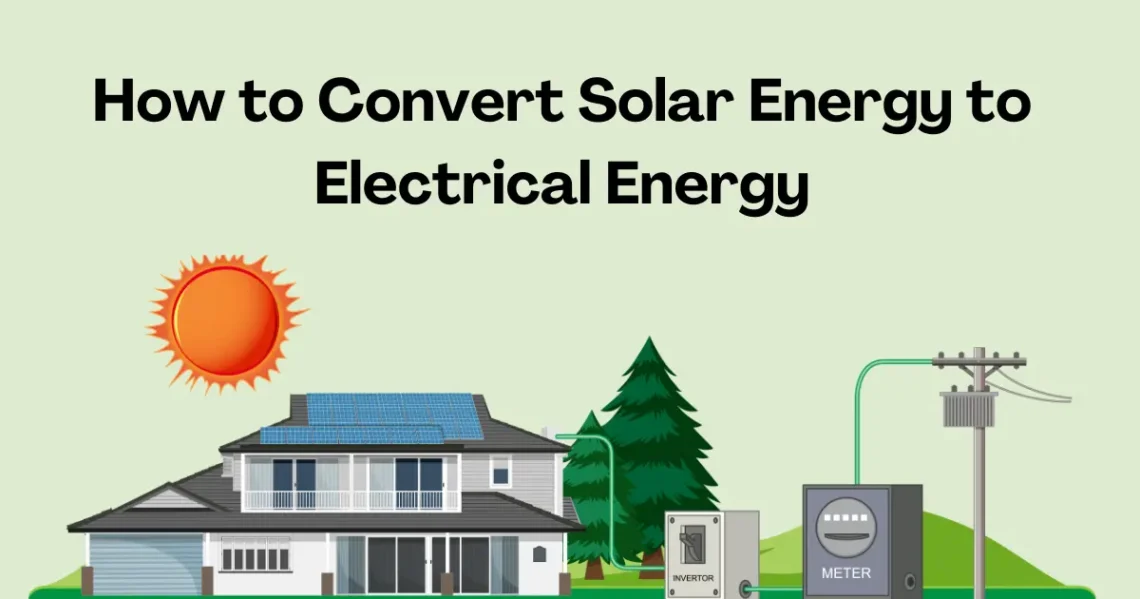
Solar panels, made of photovoltaic cells, are the primary technology used to convert solar energy to electrical energy.
- Photons from sunlight strike the PV cells, exciting electrons.
- This movement of electrons generates direct current (DC) electricity.
- An inverter converts DC into alternating current (AC), compatible with home and industrial use.
Example Use Case: A rooftop solar installation can power a household entirely, with excess energy stored or fed back into the grid.
Types of PV Cells
- Monocrystalline: High efficiency, sleek design, ideal for limited space.
- Polycrystalline: Slightly lower efficiency but cost-effective.
- Thin-Film: Flexible, lightweight, suitable for large-scale applications.
Components of a Solar Power System
Core Components
A complete solar energy system consists of several interconnected elements that ensure efficient energy conversion and distribution.
- Solar Panels: Capture sunlight and convert it into DC electricity.
- Inverter: Converts DC to AC electricity.
- Mounting System: Ensures optimal panel orientation.
- Charge Controller: Protects batteries and manages power flow (for off-grid systems).
Example Use Case: A solar-powered office setup uses an inverter and battery bank to maintain continuous power, even during cloudy days.
Optional Add-ons
- Monitoring Systems: Track performance and detect inefficiencies.
- Smart Meters: Integrate solar output with the electrical grid.
Solar Energy Storage
Why Storage Matters
Solar energy is intermittent—it’s only available when the sun shines. Storage solutions make solar power reliable 24/7.
- Batteries: Lithium-ion or lead-acid batteries store excess electricity.
- Hybrid Systems: Combine grid and battery storage for uninterrupted supply.
- Energy Management Software: Optimizes energy use and reduces waste.
Example Use Case: A residential solar battery system stores daytime excess energy for nighttime lighting and appliance use.
Efficiency Factors
Maximizing Conversion Efficiency
Several variables impact how effectively sunlight becomes usable electricity.
- Panel orientation and tilt angle.
- Geographic location and sunlight exposure.
- Temperature and shading effects.
- Panel quality and degradation over time.
Tip: Regular maintenance and cleaning can improve solar panel efficiency by up to 15%.
Real-World Efficiency Benchmarks
- Residential PV systems: 15–22% efficiency.
- Industrial PV farms: up to 25% efficiency with tracking systems.
Practical Applications
Residential and Commercial Use
- Homes: Reduce electricity bills, increase energy independence.
- Offices and factories: Lower operating costs, support sustainability goals.
- Remote communities: Provide power where grids are unavailable.
Industrial and Utility-Scale Use
- Large solar farms can feed hundreds of homes.
- Integration with smart grids for load balancing.
- Solar-powered EV charging stations are emerging globally.
Future Innovations
Emerging Technologies
- Bifacial Solar Panels: Capture sunlight on both sides for higher efficiency.
- Perovskite Cells: Potential for cheaper, more efficient solar conversion.
- Floating Solar Farms: Utilize water surfaces to reduce land use and improve cooling.
Smart Grid Integration
- Predictive algorithms optimize solar energy usage.
- Demand-response systems enhance efficiency.
- AI-driven monitoring improves system longevity and performance.
FAQs
Q1: Can solar panels work on cloudy days?
Yes, but their efficiency drops. Modern panels can still generate 10–25% of their typical output under diffuse sunlight.
Q2: How long do solar panels last?
Most panels come with a 25-year warranty, with gradual efficiency loss over time.
Q3: Is it expensive to convert solar energy to electrical energy?
Initial costs can be high, but long-term savings, incentives, and reduced electricity bills often outweigh upfront expenses.
Q4: Can I store solar electricity for later use?
Yes, using batteries or hybrid systems, you can store excess energy for nighttime or cloudy days.
Q5: Do I need professional installation?
Professional installation ensures safety, optimal orientation, and compliance with local regulations.
Conclusion
Converting solar energy to electrical energy is no longer a niche technology—it’s an accessible, practical solution for sustainability, cost savings, and energy independence. From residential rooftops to industrial solar farms, understanding the components, technology, and efficiency factors empowers smarter energy decisions. The sun offers unlimited potential; converting its rays into electricity transforms that potential into tangible power for a cleaner, greener future.