

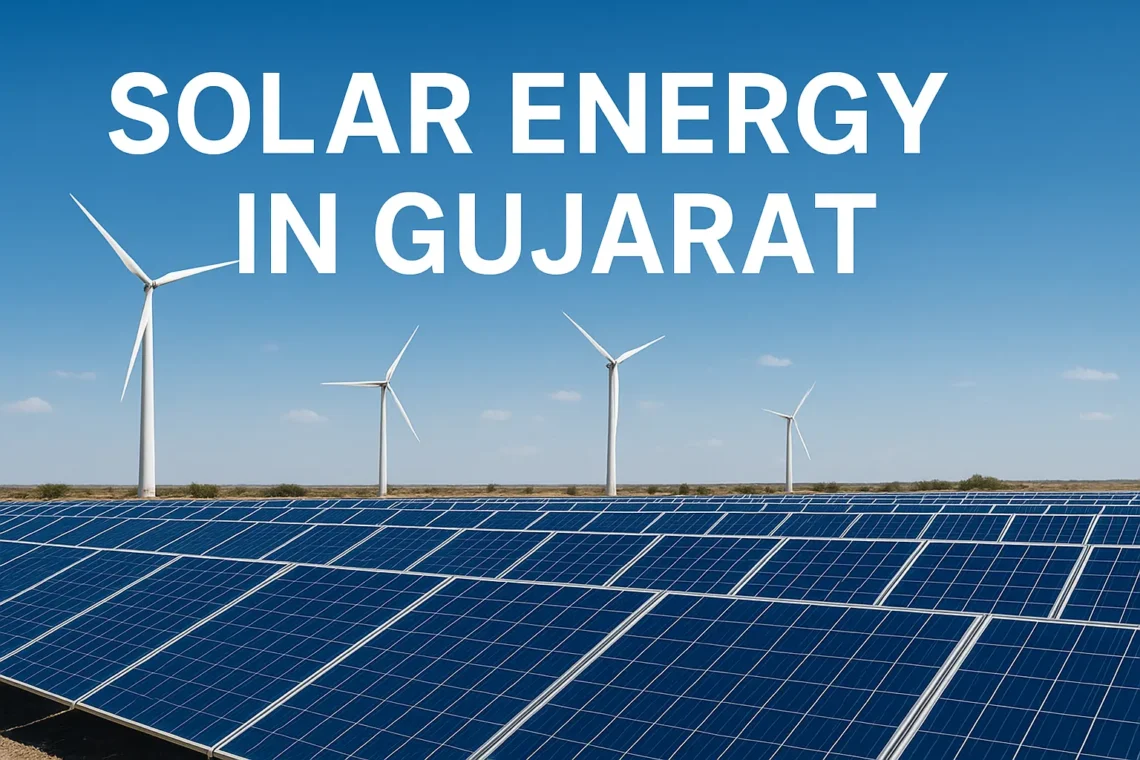

Gujarat, often hailed as India’s energy powerhouse, has emerged as a leader in solar energy adoption. With its abundant sunlight, proactive government policies, and rapidly growing industrial base, the state is shaping a sustainable energy future. Solar energy in Gujarat is no longer just an alternative; it is becoming a central pillar in India’s renewable energy strategy.
This article explores how Gujarat leverages its solar potential, the technologies driving growth, policy frameworks, economic impacts, and what the future holds for this renewable revolution. Whether you are an investor, policymaker, or energy enthusiast, understanding Gujarat’s solar journey provides valuable insights into the broader transition toward sustainable energy in India.
Gujarat’s Solar Landscape
Sunlight Potential
Gujarat receives an average solar insolation of 5.5–6.0 kWh/m²/day, one of the highest in India. This consistent solar exposure creates optimal conditions for large-scale photovoltaic (PV) projects.
- Ideal for both rooftop and utility-scale solar plants
- Reduces dependence on fossil fuels
- Supports distributed energy models for rural electrification
Example: The Charanka Solar Park in Patan district demonstrates how vast desert areas can generate over 500 MW of clean electricity, powering nearby towns efficiently.
Current Capacity
As of recent reports, Gujarat leads Indian states in installed solar capacity, with over 6 GW operational. Rapid project approvals and private sector participation have fueled this growth.
- Combination of government and private initiatives
- Integration with the national grid for better energy reliability
- Potential for adding another 3–4 GW in the next five years
Government Policies and Incentives
Solar-Friendly Policies
The Gujarat Renewable Energy Development Agency (GREDA) has spearheaded state-level solar initiatives, aligning with national policies like the National Solar Mission. Incentives aim to reduce installation costs and encourage private sector participation.
- Capital subsidies for rooftop solar installations
- Net metering policies to encourage residential adoption
- Streamlined approvals for solar parks and industrial rooftops
Example: GREDA’s incentive programs have made solar rooftop panels affordable for thousands of households in Ahmedabad and Surat.
Tax and Financing Benefits
Financial support mechanisms make solar projects more attractive:
- Accelerated depreciation benefits for businesses
- Low-interest loans for solar installations
- Priority grid access for renewable energy producers
Technology Driving Gujarat’s Solar Boom
Photovoltaic Panels and Efficiency
Modern PV panels dominate Gujarat’s solar installations, offering high efficiency and durability.
- Monocrystalline panels with >20% efficiency
- Bifacial panels capturing sunlight from both sides
- Smart inverters for grid stability
Example: Industrial facilities in Vadodara use bifacial solar panels to reduce their energy bills by up to 30%.
Energy Storage and Smart Grids
Solar adoption is complemented by advanced energy storage solutions and grid modernization.
- Lithium-ion batteries for peak-hour storage
- Smart meters to balance supply and demand
- Microgrid systems for remote areas
Economic Impacts
Job Creation
Solar energy growth translates into employment opportunities in manufacturing, installation, and maintenance.
- Estimated 50,000–60,000 direct jobs by 2025
- Skill development programs in solar engineering
- Boost for local SMEs providing ancillary services
Investment and Industrial Growth
The state’s solar sector attracts significant domestic and international investment.
- Multinational companies setting up solar panel factories
- Solar parks boosting regional industrial hubs
- Increased energy security lowers production costs for local industries
Challenges and Limitations
Land and Environmental Concerns
Large-scale solar parks require significant land, occasionally leading to land-use conflicts.
- Need for careful site selection to minimize ecological impact
- Potential displacement issues for local communities
Grid Integration
High solar penetration can strain existing grid infrastructure, requiring upgrades and smart solutions.
- Voltage fluctuations during peak production
- Necessity for advanced forecasting and storage solutions
Future Outlook
Expanding Solar Capacity
Gujarat plans to achieve 15 GW of solar capacity by 2030, integrating more rooftop systems and community solar projects.
- Focus on hybrid solar-wind farms
- Development of floating solar panels in reservoirs
- Enhanced collaboration with private investors
Innovation and Sustainability
Emerging technologies like perovskite solar cells and AI-based energy management systems promise to improve efficiency and sustainability.
FAQ
Q1: How much solar power does Gujarat produce annually?
Gujarat produces over 6 GW of solar energy currently, enough to power millions of households and contribute significantly to India’s renewable energy targets.
Q2: Can households benefit from solar energy in Gujarat?
Yes, rooftop solar installations with net metering allow households to reduce electricity bills and even sell surplus energy back to the grid.
Q3: What are the main challenges in Gujarat’s solar sector?
Key challenges include land availability, environmental impact, grid integration, and the need for affordable storage solutions.
Q4: Are there government incentives for solar energy adoption?
Yes, Gujarat offers subsidies, tax benefits, and low-interest loans to encourage both residential and commercial solar projects.
Conclusion
Gujarat’s solar energy story reflects a state embracing innovation, sustainability, and economic growth in tandem. With abundant sunlight, supportive policies, and technological advancements, solar energy in Gujarat is not just illuminating homes and industries—it is lighting a path toward a cleaner, greener future. As the state continues to innovate, it offers a blueprint for renewable energy adoption across India and beyond.


