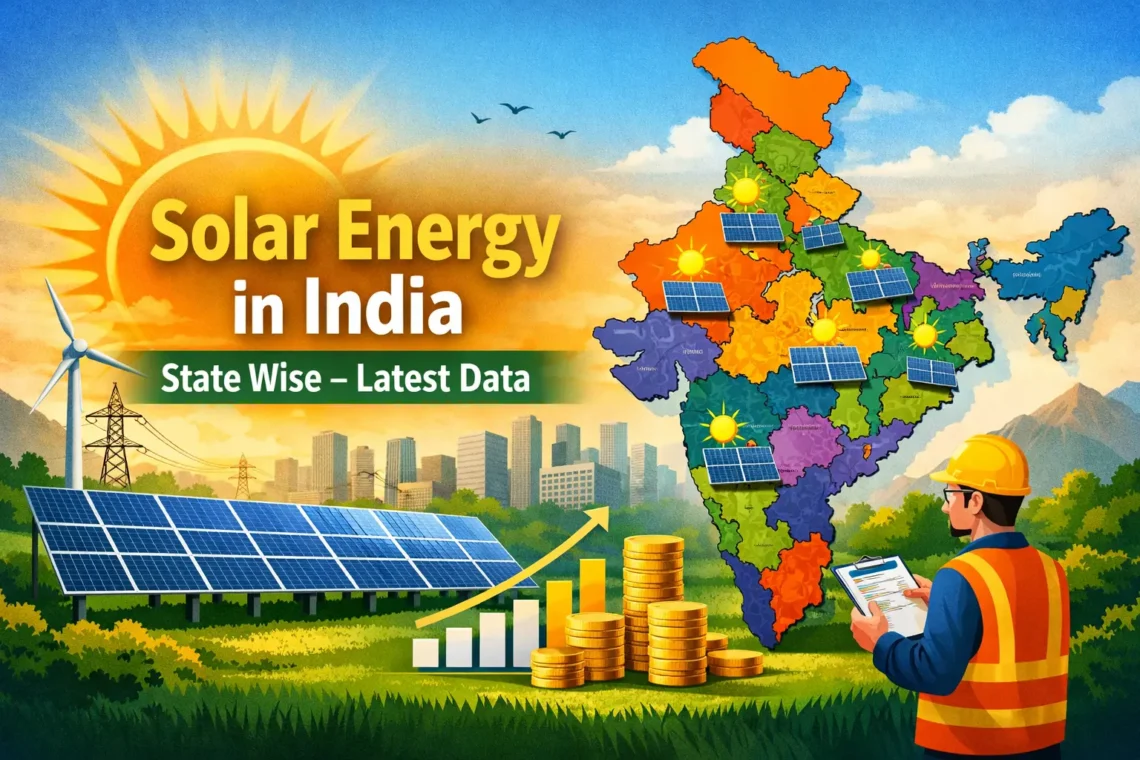

India’s solar story has moved quickly—from scattered pilot projects to one of the world’s fastest-growing renewable energy markets. Today, solar power is no longer a future promise; it is a working backbone of India’s clean energy transition. Understanding solar energy in India state wise – latest data matters because energy growth in India is deeply regional. Geography, policy, land availability, and grid readiness all shape how each state adopts solar power.
This article breaks down solar energy in India state wise – latest data, explaining which states lead, why others are catching up, and how regional strengths influence national progress. Whether you are a student, investor, policymaker, or simply curious, this guide offers a clear, grounded view of where India’s solar capacity stands today—and where it is heading next.
Overview of Solar Energy Growth in India
National Solar Capacity Snapshot
India’s solar capacity has grown from near-zero a decade ago to tens of gigawatts today, driven by falling panel prices and supportive policy frameworks. Reported government data shows solar energy now contributes a meaningful share of India’s total installed power capacity, with utility-scale projects and rooftop systems expanding in parallel.
In plain terms, solar has moved from experimental to essential. It is now one of the cheapest sources of new electricity generation in India, often undercutting coal in competitive bids.
Key national trends include:
- Rapid growth in large solar parks across western and southern states
- Increasing rooftop solar adoption in urban centers
- Hybrid projects combining solar with wind or storage
A practical example: large solar parks feed electricity directly into state grids, helping meet peak daytime demand while reducing fossil fuel dependence.
Why State Wise Data Matters
Solar energy in India state wise – latest data reveals uneven progress. Some states benefit from high solar irradiance and vast land, while others leverage rooftops and industrial demand.
State-level data helps:
- Identify regional investment opportunities
- Understand grid and infrastructure gaps
- Track policy effectiveness across states
Without state-wise analysis, national averages can hide both success stories and bottlenecks.
Rajasthan: India’s Solar Powerhouse
Solar Potential and Installed Capacity
Rajasthan consistently ranks at the top for solar energy in India state wise – latest data. Its arid climate, high sunlight hours, and large tracts of unused land make it ideal for utility-scale solar.
Reported figures place Rajasthan among the highest installed solar capacity states in India. Solar parks like Bhadla have become global reference points for scale and cost efficiency.
Core advantages include:
- Extremely high solar radiation levels
- Low population density in desert regions
- Strong transmission infrastructure
A real-world use case: massive solar farms in western Rajasthan supply power to multiple states, acting as a regional energy hub.
Policy and Infrastructure Support
Rajasthan’s solar success is not accidental. State policies have streamlined land acquisition and grid connectivity. Long-term power purchase agreements reduce investor risk, accelerating deployment.
This combination of natural advantage and administrative clarity keeps Rajasthan firmly ahead in solar rankings.
Gujarat: Policy-Driven Solar Leadership
Early Adoption and Innovation
Gujarat was among the earliest adopters of solar energy in India state wise – latest data. It invested early in both large-scale solar parks and decentralized rooftop systems.
Plainly put, Gujarat treated solar as an industrial opportunity, not just an environmental goal.
Notable features:
- Strong rooftop solar penetration
- Solar-friendly industrial zones
- Early grid integration planning
A practical example: factories in Gujarat use rooftop solar to reduce electricity bills while exporting surplus power to the grid.
Industrial and Export Synergies
Gujarat’s ports and manufacturing base create natural demand for clean energy. Solar power supports export-oriented industries seeking lower carbon footprints, making renewable energy a competitive advantage rather than a cost.
Karnataka: Balancing Utility and Rooftop Solar
Diverse Solar Deployment
Karnataka stands out in solar energy in India state wise – latest data for its balanced approach. It combines large solar parks with aggressive rooftop solar programs in cities like Bengaluru.
The state benefits from:
- Strong IT and commercial demand
- Supportive net-metering policies
- Hybrid renewable projects
For example, tech parks in Bengaluru rely on rooftop solar to offset daytime electricity loads, reducing strain on the grid.
Grid Integration Challenges
Rapid capacity addition has occasionally stressed Karnataka’s grid. Reported challenges include curtailment during peak generation hours, highlighting the need for storage and flexible demand management.
Tamil Nadu: Solar Meets Wind Power
Hybrid Renewable Advantage
Tamil Nadu’s renewable identity has long been wind-driven. Now, solar energy in India state wise – latest data shows solar expanding alongside wind to create hybrid systems.
This approach:
- Smooths power supply fluctuations
- Improves grid stability
- Maximizes land use
A practical case: wind-solar hybrid parks generate electricity across more hours of the day, reducing reliance on thermal backup.
Industrial Demand and Urban Growth
High industrial demand and urbanization keep solar adoption strong. Rooftop systems are growing steadily, especially in commercial buildings.
Andhra Pradesh: Rapid Expansion with Caution
Fast Capacity Addition
Andhra Pradesh has added solar capacity at remarkable speed. Large solar parks have reshaped the state’s energy mix, placing it high in solar energy in India state wise – latest data rankings.
Key drivers include:
- Availability of flat land
- Favorable solar irradiance
- Aggressive bidding processes
A real-world example: mega solar parks supply power under long-term contracts, stabilizing daytime electricity prices.
Policy Uncertainty and Investor Confidence
At times, reported policy revisions have created uncertainty for investors. This highlights how regulatory consistency is just as important as natural potential in sustaining solar growth.
Emerging Solar States and Future Growth
Uttar Pradesh, Madhya Pradesh, and Maharashtra
Beyond the leaders, several states are rapidly scaling up. Solar energy in India state wise – latest data shows these regions leveraging rooftops, canals, and agricultural land.
Emerging trends include:
- Canal-top solar to save land
- Solar pumps for agriculture
- Urban rooftop incentives
For instance, solar-powered irrigation pumps reduce diesel use while supporting rural livelihoods.
Role of Storage and New Technologies
Future state-wise growth will increasingly depend on battery storage, grid upgrades, and smart forecasting. These technologies help solar power behave more like a stable, round-the-clock resource.
Conclusion
Solar energy in India state wise – latest data tells a story of diversity, ambition, and adaptation. States like Rajasthan and Gujarat lead through scale and policy clarity, while others innovate through rooftops, hybrids, and decentralized systems. Together, these regional efforts form the backbone of India’s clean energy future.
As technology matures and storage becomes mainstream, state-wise differences may narrow. But for now, understanding regional strengths remains key to tracking where India’s solar journey is heading—and how sunlight is quietly reshaping the country’s energy destiny.
FAQs
Which state has the highest solar capacity in India?
Rajasthan currently leads, driven by large solar parks and exceptional sunlight availability.
Why is state-wise solar data important?
It highlights regional strengths, policy effectiveness, and investment opportunities often hidden in national averages.
Is rooftop solar growing across all states?
Yes, especially in urban and industrial regions, though growth rates vary based on state incentives.
Which states are emerging solar leaders?
Uttar Pradesh, Madhya Pradesh, and Maharashtra are expanding rapidly with diverse solar models.
Will storage change state-wise solar rankings?
Likely. States investing early in battery storage and grid flexibility may gain long-term advantages.