

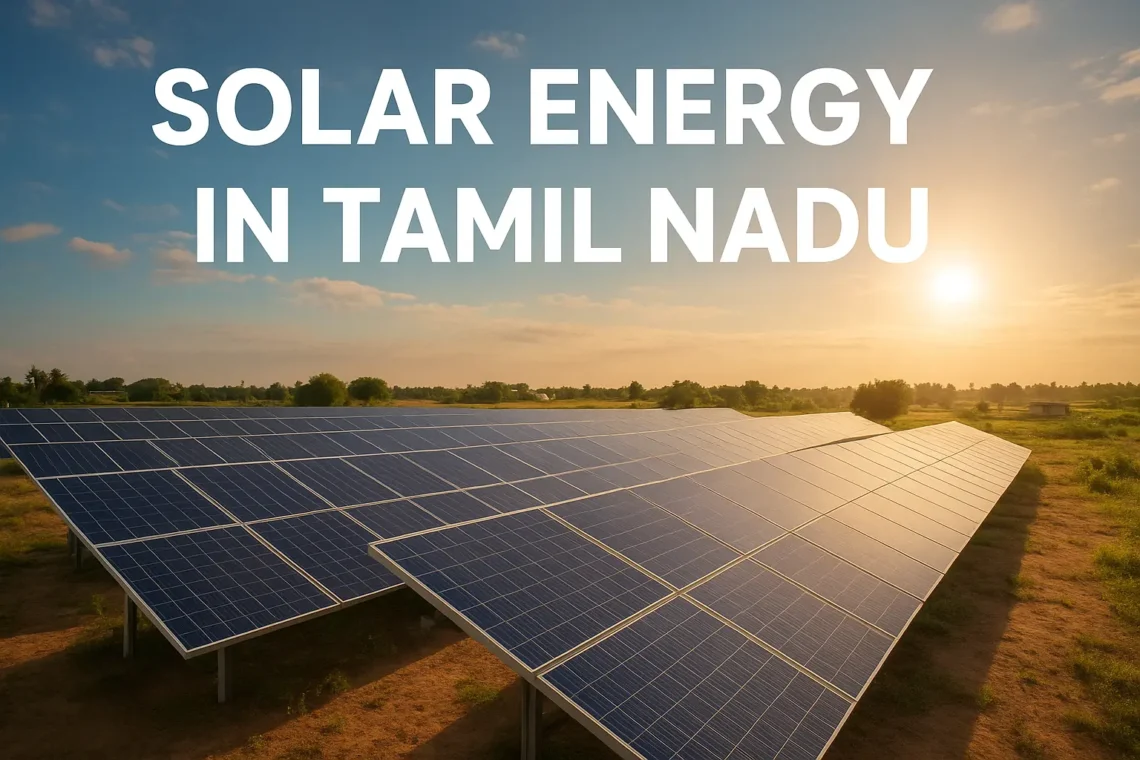

Tamil Nadu, one of India’s most industrially advanced states, is rapidly emerging as a leader in renewable energy adoption. Among the various clean energy sources, solar energy in Tamil Nadu has witnessed remarkable growth over the past decade. Driven by favorable climatic conditions, state policies, and falling solar technology costs, the region is positioning itself as a hub for sustainable power generation. This article explores the technical landscape, policy framework, business trends, and real-world applications of solar energy in the state.
Readers will gain insights into the current status of solar projects, key government incentives, technological innovations, and practical implications for industries and households alike. By understanding these dynamics, stakeholders can better navigate opportunities and challenges in Tamil Nadu’s solar ecosystem.
Current Landscape of Solar Energy in Tamil Nadu
Solar Capacity and Growth
Tamil Nadu has consistently ranked among India’s top states in installed solar capacity. According to reported government statistics (2024), the state has over 4.5 GW of operational solar capacity, with ambitious targets to reach 10 GW by 2030.
- Favorable solar irradiance of 4–6 kWh/m²/day
- Rapid installation of rooftop and ground-mounted solar projects
- Active participation by both private and public sector developers
Example: The Kamuthi Solar Power Project, one of the world’s largest single-location solar farms, demonstrates Tamil Nadu’s scale in renewable energy deployment.
Regional Distribution
The state’s solar infrastructure is concentrated in districts like Tirunelveli, Madurai, and Kancheepuram. Rooftop installations are growing in Chennai and Coimbatore, supporting urban power needs.
Government Policies and Incentives
State-Level Solar Policies
Tamil Nadu’s Solar Energy Policy (announced 2023) aims to promote distributed generation, private investments, and grid integration.
- Feed-in tariffs for small-scale solar producers (reported 2023)
- Net metering for rooftop installations
- Financial support for solar parks and hybrid energy projects
Practical Use: Businesses installing rooftop solar systems benefit from reduced electricity bills and priority grid connectivity.
Central Government Support
National schemes, including the National Solar Mission and Renewable Energy Development Fund, complement state efforts with subsidies and tax incentives.
Solar Technology Innovations
Photovoltaic (PV) Panels
Most projects in Tamil Nadu rely on crystalline silicon PV technology, favored for efficiency and durability.
- Module efficiency between 18–22%
- Lifespan of 25–30 years
- Performance under high-temperature conditions
Use Case: Residential rooftop PV panels in Coimbatore provide reliable energy for daytime and peak electricity usage.
Energy Storage Solutions
Battery storage systems are increasingly integrated with solar plants to enhance grid stability.
- Lithium-ion and lead-acid options
- Supports load balancing during peak demand
- Enables off-grid and microgrid applications
Economic and Environmental Impacts
Cost Savings and Revenue
Solar adoption reduces dependency on conventional electricity and lowers operational costs for industries.
- Average reduction of 20–30% in monthly electricity bills for businesses
- Potential revenue from selling surplus power to the grid
Environmental Benefits
Switching to solar reduces greenhouse gas emissions and local air pollution.
- Avoids 3.2 million tons of CO₂ annually (reported estimate, 2024)
- Supports Tamil Nadu’s commitment to India’s Nationally Determined Contributions (NDCs)
Challenges and Barriers
Technical and Infrastructure Limitations
Despite growth, solar energy in Tamil Nadu faces challenges:
- Grid congestion in high-capacity districts
- Land acquisition hurdles for large-scale solar farms
- Weather-dependent energy generation variability
Financial and Policy Risks
Investors occasionally encounter delays due to changing tariffs or bureaucratic approvals. Stable long-term policy is essential to sustain growth.
Future Prospects
Emerging Trends
Hybrid renewable energy projects combining solar and wind are gaining attention, particularly in coastal regions. Smart-grid technologies are also being piloted to optimize energy distribution.
Long-Term Outlook
With ongoing technological innovations, state incentives, and rising environmental awareness, Tamil Nadu is projected to surpass 10 GW by 2030, reinforcing its status as a renewable energy leader.
FAQ
Q1: How much sunlight does Tamil Nadu receive for solar generation?
Tamil Nadu receives an average of 4–6 kWh/m²/day, making it highly suitable for solar PV installations.
Q2: Can households benefit from solar energy in Tamil Nadu?
Yes, rooftop solar systems with net metering allow households to reduce electricity bills and feed surplus power back to the grid.
Q3: What is the average lifespan of solar panels used in the state?
Most PV panels have a lifespan of 25–30 years with proper maintenance.
Q4: Are there subsidies for solar projects in Tamil Nadu?
Both state and central government schemes offer financial incentives, including tax breaks and feed-in tariffs, especially for rooftop and small-scale projects.
Q5: How does solar energy contribute to environmental sustainability?
Solar energy reduces reliance on fossil fuels, lowers CO₂ emissions, and minimizes air pollution, supporting climate goals.
Conclusion
Solar energy in Tamil Nadu is more than a technical or economic trend; it represents a strategic shift toward sustainable growth. With strong policy support, technological advancements, and public interest converging, the state is crafting a blueprint for clean energy adoption that balances environmental responsibility with economic development. Tamil Nadu’s solar journey is a testament to the potential of renewable energy in transforming regions and communities alike.


