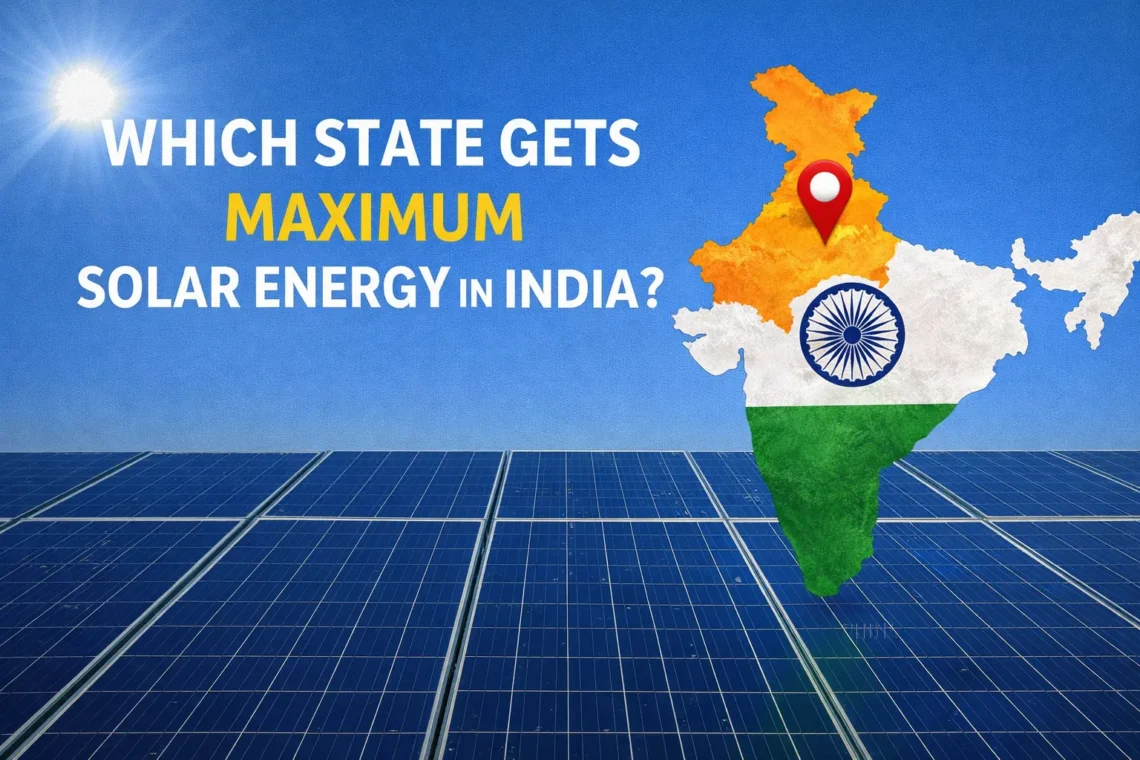

India’s solar story often begins with a simple question: which state gets maximum solar energy in India? It sounds straightforward, but the answer blends geography, climate science, infrastructure, and policy choices. Solar energy is not just about how many panels are installed; it starts with how much sunlight a region naturally receives and how effectively that sunlight is converted into usable power.
Right now, as India accelerates toward ambitious renewable energy targets, this question matters more than ever. States with the highest solar potential are shaping where large projects are built, where investors focus, and how quickly clean energy can replace fossil fuels. In this article, we examine the science behind solar potential, compare leading states, and clearly explain which state gets maximum solar energy in India—and why that leadership matters for the country’s energy future.
Understanding Solar Energy Potential in India
What does “maximum solar energy” really mean?
When asking which state gets maximum solar energy in India, it’s important to define the term clearly. Solar energy potential is usually measured by solar irradiation, which indicates how much sunlight reaches a given area over time.
In plain language, this is the difference between a place that enjoys clear, sunny days most of the year and one where clouds, rain, or humidity reduce sunlight intensity.
Key factors that determine solar potential include:
- Average annual sunlight hours
- Solar irradiation levels measured in kWh per square meter
- Seasonal weather patterns such as monsoons
For example, two states may both have large solar plants, but the one with higher irradiation can generate more electricity from the same size installation.
Why geography and climate matter
India’s geography creates sharp contrasts in solar potential. Desert regions in the west receive intense sunlight for most of the year, while coastal and northeastern regions face more cloud cover.
From a technical perspective:
- Dry climates improve panel efficiency
- Low rainfall reduces downtime and maintenance
- Flat, open land allows large-scale deployment
This is why solar maps consistently highlight western India as the country’s solar hotspot.
Rajasthan: The State With Maximum Solar Energy Potential
Why Rajasthan leads India in solar energy
Based on reported solar irradiation data and project outcomes, Rajasthan is widely recognized as the state that gets maximum solar energy in India. Its vast desert landscapes receive some of the highest sunlight levels in the country.
The Thar Desert region, in particular, offers:
- Extremely high solar irradiation
- More than 300 sunny days annually
- Large, low-population land parcels
In simple terms, Rajasthan has the ideal natural conditions for solar—strong sunlight, open land, and minimal weather disruption.
Solar technology advantages in Rajasthan
Plain-language explanation: Solar panels work best where sunlight is strong and consistent. Rajasthan provides both.
Typical technical advantages include:
- Higher capacity utilization factors
- Lower shading and dust-related losses
- Predictable generation patterns
A practical example is the Bhadla Solar Park, which has achieved generation levels that outperform many similar-sized projects elsewhere due to superior sunlight conditions.
Gujarat: Strong Solar Irradiation With Early Adoption
Solar potential combined with policy strength
While Rajasthan gets maximum solar energy in India in terms of raw sunlight, Gujarat closely follows due to strong irradiation levels and early solar adoption.
Reported data shows Gujarat receives:
- High sunlight across most districts
- Favorable coastal and semi-arid climates
- Consistent annual solar output
This natural advantage is amplified by policy clarity and early grid investments.
Rooftop and utility-scale balance
Gujarat demonstrates how solar potential translates into real-world usage.
Key impacts include:
- Efficient rooftop solar utilization in cities
- Large solar parks in open regions
- High investor confidence
For example, industrial rooftops in Gujarat generate substantial daytime power, directly offsetting fossil fuel consumption.
Comparing Solar Potential vs Installed Capacity
Why maximum sunlight does not always mean maximum capacity
A common misunderstanding is equating solar potential with installed solar capacity. While Rajasthan gets maximum solar energy in India from a climate perspective, installed capacity depends on additional factors.
These include:
- Transmission infrastructure availability
- State-level policy incentives
- Access to investment and land approvals
Some states with slightly lower irradiation may still rank high in capacity due to faster project execution.
Capacity utilization as the real indicator
From an engineering standpoint, capacity utilization factor (CUF) shows how efficiently solar plants operate.
Higher CUF means:
- More electricity from the same system
- Better returns on investment
- Lower per-unit cost of power
Rajasthan consistently records high CUF values, reinforcing its position as the state with maximum solar energy advantage.
Scientific Data Behind India’s Solar Maps
How solar energy potential is measured
Solar potential assessments rely on satellite data, ground sensors, and long-term climate modeling. Reported studies from national agencies consistently place western India at the top.
Key measurement inputs include:
- Global horizontal irradiation
- Direct normal irradiation
- Seasonal cloud movement
These datasets confirm that Rajasthan receives the highest average solar radiation in India.
Reliability of long-term trends
Unlike wind or rainfall, solar irradiation patterns remain relatively stable over decades. This makes solar planning less risky and more predictable in high-potential states.
A practical use case is long-term power purchase agreements in Rajasthan, where developers can confidently forecast generation over 25 years.
Why Maximum Solar Energy Matters for India
Energy security and climate goals
States that get maximum solar energy in India play a crucial role in national energy security. High solar output reduces dependence on coal imports and stabilizes power costs.
Impacts include:
- Lower carbon emissions
- Reduced fuel price volatility
- Improved daytime grid stability
Solar-rich states effectively become clean energy exporters to the rest of the country.
Economic and social benefits
High solar potential attracts:
- Infrastructure investment
- Local employment
- Ancillary industries like manufacturing and services
For example, solar parks in Rajasthan have created jobs in remote regions, combining climate action with economic development.
Will Rajasthan Always Lead in Solar Energy?
Climate stability and future projections
Based on reported climate models, Rajasthan’s solar advantage is expected to remain stable. Climate change may affect rainfall patterns, but sunlight levels are projected to stay high.
This means Rajasthan is likely to retain its position as the answer to which state gets maximum solar energy in India for decades.
Role of technology evolution
Advances in panel efficiency and storage may help lower-irradiation states close the gap. However, higher sunlight will always provide a baseline advantage.
In other words, better technology helps everyone—but it helps the sunniest regions most.
Frequently Asked Questions
Which state gets maximum solar energy in India?
Rajasthan receives the highest solar irradiation in India, making it the state with maximum solar energy potential.
Is Rajasthan also the top solar power producer?
Yes. Rajasthan consistently ranks among the top states in installed solar capacity and electricity generation.
Why not Gujarat or Karnataka?
These states perform very well, but Rajasthan’s desert climate provides stronger and more consistent sunlight overall.
Does high solar energy mean lower electricity costs?
Generally yes. Higher sunlight improves efficiency, reducing the cost per unit of solar power.
Can other states overtake Rajasthan?
While capacity rankings can change, Rajasthan’s natural solar advantage makes it difficult to surpass in raw potential.
Conclusion
So, which state gets maximum solar energy in India? The answer, supported by climate data and real-world performance, is Rajasthan. Its unmatched sunlight, vast open land, and proven project success place it at the center of India’s solar revolution. As the country races toward a cleaner energy future, Rajasthan’s sun-drenched landscape is doing more than shining—it’s powering a national transformation.